About Esther
She learned early that the work you carry alone can own you.
Esther Q Tsedey is the Business Architect behind the S2Q™ Method, with a career built across quality and risk management, finance, and mergers and acquisitions. She is an author and has been a studio guest on the NBC station in Fresno, California.

The well
As a girl, Esther carried water before sunrise. That memory stayed with her because it taught the lesson behind the work: what you carry alone eventually owns you.
The work
Her foundation was quality and risk management: understanding how systems hold, where they fail, and what happens when too much depends on one person. Finance came next. Over time, she began designing the systems herself—building from scratch and taking responsibility for how the whole business holds together.
The turn
In mergers and acquisitions, the pattern became clear: strong companies, exhausted founders, and too much value trapped in one person. Esther saw that her work belonged before the exit—helping the founder build a business that could run and hold its value without them.
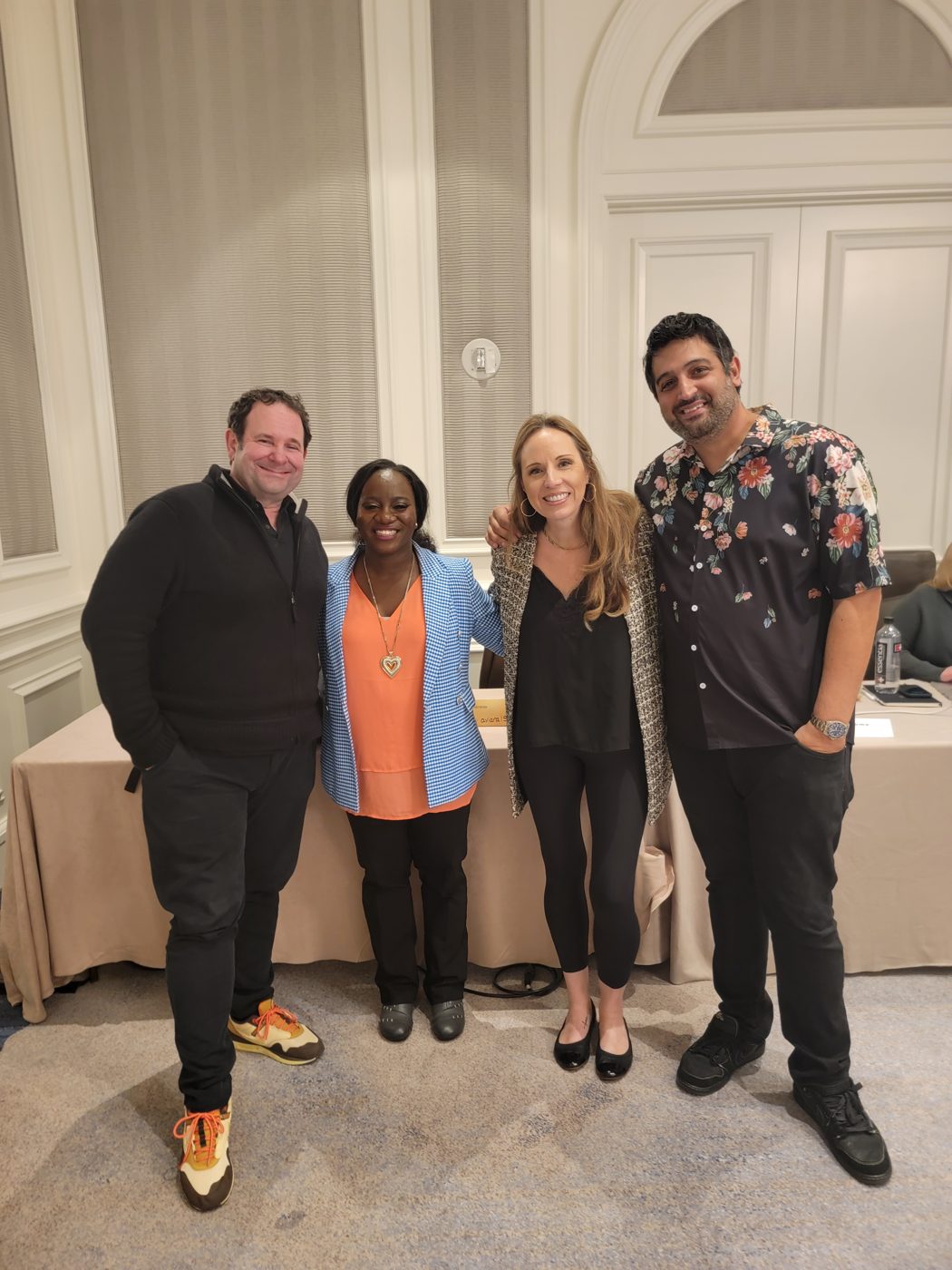
In the M&A room
She learned the buyer's side from mentors, then worked beside them.
Esther trained under M&A mentors and later worked with them. It is where she learned to look at a company the way a buyer does.
Roots
Some of this is personal.
Esther tells this part plainly because it explains why she will not let another founder wait until the runway is gone.
Her father, Joseph, built a life on a craft that lived in his hands. He was brilliant at it. But a lifetime of skill that lives in one person's hands is the hardest kind of thing to pass on. When the time finally came, he walked away with a fraction of what that lifetime was worth. Not nothing. But a fraction.
By the time Esther understood what was happening, she could see what his business needed: a way for the work and its value to continue beyond one person's hands. The hard part was not knowing what to do. It was that her father could not let her in. By the time he opened the door, the runway was almost gone.
She could stop the bleeding. She could make sure he closed in the green, not in a hole. She could not give him back the years.
“I did not save him. It is the reason I will not let another founder wait.”Esther Q Tsedey
Today, the work is direct.
Today, the father who once could not imagine anyone outside his trade understanding his life's work is her greatest advocate. If he could open the door, another founder can too.
Esther helps founders turn companies that depend on them into businesses that can run—and hold their value—without them. She has acquired, operated, and exited businesses herself, and she knows what a buyer sees. She chose not to trap herself inside them. Her own life carries the book's thesis: just because you are good at something does not mean you should build a prison around it.